

STERLING, Va. — There are jobs, and then there are challenges. Scott O’Neil joined LIV Golf as its new CEO last year, and saw the job turn into a challenge last month. That’s when Saudi Arabia’s Public Investment Fund, the near-trillion-dollar fund backing LIV, revealed that it would be ending its funding of LIV Golf, effective at the end of this season. O’Neil has spent the weeks since rallying potential investors, looking to chart a new path for the onetime-breakaway golf league.
On Thursday afternoon, O’Neil sat down with Yahoo Sports in Club 54, LIV’s 18th-green executive hospitality suite, to talk about LIV’s short- and long-term prospects, global ambitions, and hopes for unity in the golf game going forward. (This interview has been lightly edited for clarity.)
What exactly is LIV right now? Is it a golf tour, an event, some combination of both?
I’m not sure it’s the answer exactly to your question, but there is an opportunity in golf. Because, at least since the era of Tiger Woods, let’s call it 46 of the 47 biggest golf events in the world have been in the U.S. The other one’s been in the UK. What COVID taught us more than anything else is that golf has a lot of (room for) growth. It’s got a lot of tailwinds. It’s growing around the world. Markets are starved.
That’s one piece. Second thing I’ve learned is that team golf is a really incredible format to grow the game. You don’t have to look further than the Ryder Cup.
And then the third thing I’ve learned is that what every other sport in the world has done to leverage music, and art, and fashion, and culture, and food to widen an audience base is effective in golf.
The fourth thing that’s important to think about is, this sport is so different from the other sports I’ve worked in. It’s interesting. As I’ve moved from basketball to football to hockey, back to basketball, et cetera, people say, Are they different?
No. You have a league. You have teams. Teams sell sponsorship tickets and do a media rights deal every 10 years and an arena or stadium deal every 20 or 30 years. You build your brand. It’s kind of standard business.
What’s different about golf is that this is a player’s league. In the NFL, for example, the average tenure of an NFL player, I believe this is still true, it’s 3 1⁄2 years. So with players having 3 1⁄2 years of tenure, the system is going to matter a lot more than the players.
And with golf, Sergio (Garcia) told me he played like (103) majors. That’s 27 years in the majors. It’s kind of unbelievable. Players have an inordinate amount of opportunity and influence on the future of what this game should look like.
Those are the principles, the lens with which we’re thinking through what we’ll build and where we are. So without having a plan with a bow on it, I can tell you that if you take what I said there, then you take a good look at the Indian Premier League, and the World Cup, and Formula One, and LIV Golf, you get a pretty good sense of where we’re going.
What is going to have to change about LIV based on new financial realities?
Well, just take a step back and look at golf. You have to ask yourself, how is the business of golf doing right now?
Each of the major forces in golf are all going through their own analysis, evaluation, and retrofitting to make sure that this is a sustainable business. So it won’t be anything different from what the PGA Tour is doing and what the European Tour is going to have to do in 2028.
Earlier this year, I’m sure you saw (Augusta National chairman) Fred Ridley expressed some regret that he had taken some initiatives, like Dude Perfect, that maybe didn’t grow the game the way he’d wanted to. Is there anything that you could point to in terms of LIV’s first days that you wouldn’t have done?
I’m only 17 months in. So it’s really hard to Monday morning quarterback any decisions somebody else makes. It was a different time, different era. The pressure was different. The external forces were different.
The, in some cases, inability to have courses welcome you, and some television networks not enabled to carry you, and sponsors prohibited from working with you, that’s all stuff that the previous regime went through.
When I came in, it was pretty much a clean slate. At least from a momentum standpoint, I’ve never seen traction like this before in my life.
So probably (should have been) moving faster. We anticipated the runway to be longer. When you’re running a company and you’re building a plan, you assess what you do and how you do it. Probably (should have been) trying to anticipate that the runway would be shorter.
Where would you like to see LIV fit into the golf ecosystem going forward?
Off the record would be a much better answer. On the record, I’d say we would love to continue to make progress and continue to have more legitimacy, continue to be recognized for what we’re delivering, and get more opportunities for our guys to play.
For example, the R&A, Mark Darbon’s been a big supporter of what we’ve built at LIV. And organizations like Augusta (National) and the R&A, who spend their time, effort, energy and missions trying to grow the game of golf around the world, we are so aligned with them in terms of what we do and how we do it.
For The Open, we’re really grateful that we get a spot into The Open. It’s more than zero. In Augusta, we had 10 players. Only three of our top 15 guys (in the LIV standings) were in Augusta. Would I like to see more? Of course. I’d be naive not to say that. But I also recognize it’s not my decision. It’s not my say. It’s not my opportunity.
What we can do, the best we can do, is to keep putting the facts forward, and keep putting our best foot forward, and keep representing why we do what we do, and how important it is to make sure that there’s a reward for guys who choose to fly around the world, and go to five continents, and circle the globe a few times.
Because it certainly would be a simpler and easier life to choose between North Carolina and South Carolina this week, wouldn’t it? (The PGA Tour’s events this week are at Quail Hollow in North Carolina and Myrtle Beach, South Carolina.)
These (LIV) guys commit to playing 14 events. We’ve seen some of the other tours go through some issues in the last couple of weeks, where you’ve got one of the biggest golfers in the world who’s not there. And that makes an impact on crowds, and on TV ratings. (Rory McIlroy has declined to play in several recent PGA Tour signature events.)
Fortunately for us, the way this is structured, our guys are here. If you’re a fan, you know who’s going to show up. And I think that’s a pretty good thing to think about.
What do you see as LIV’s key value proposition now, in terms of where LIV fits in the overall golf universe?
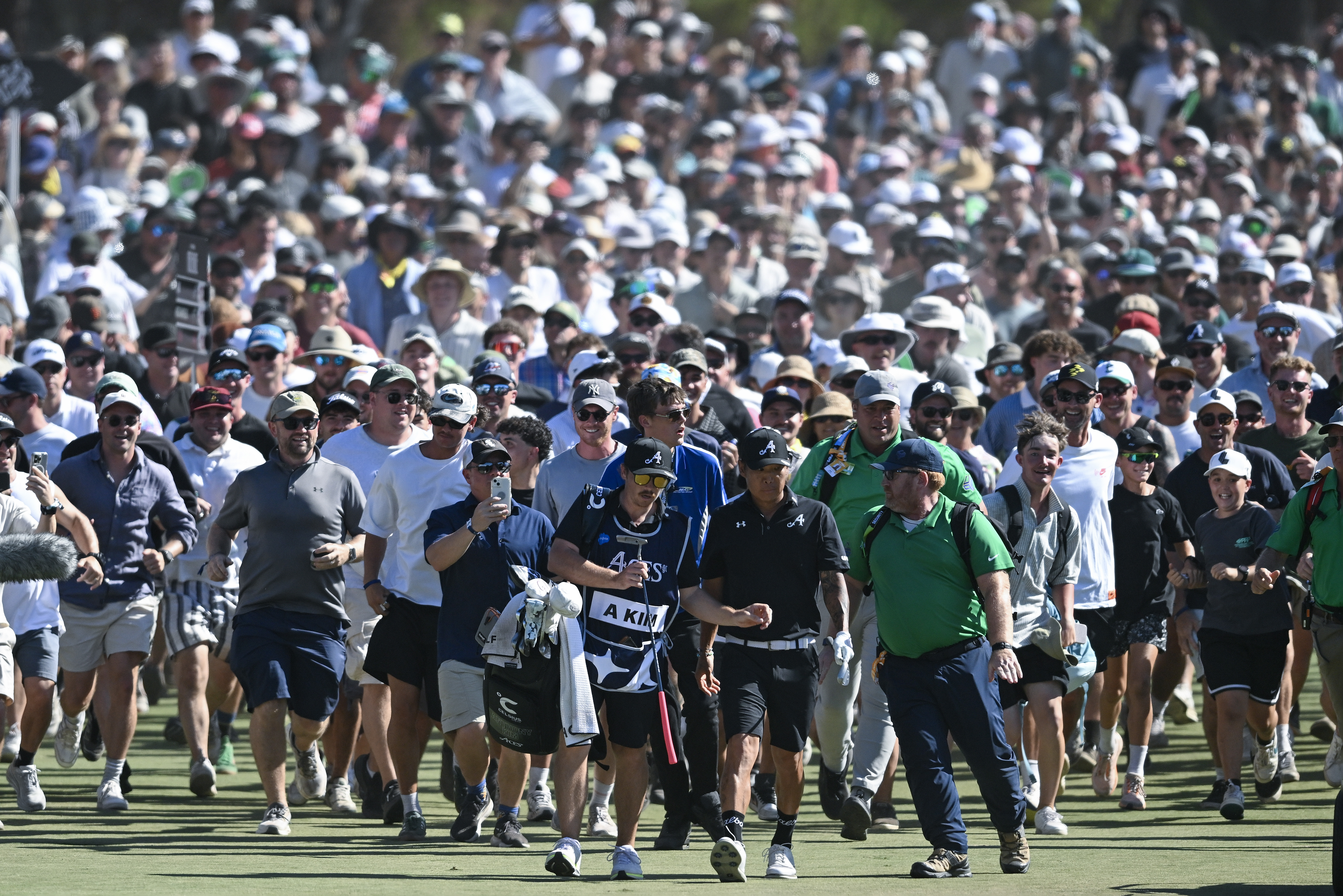
Team golf is really important, globally. We have two of the biggest global events in the world. In Australia, which is a wonderful golf market, 115,000 people there. In South Africa, we had 100,000 people, biggest golf event in the history of the country. Sixty thousand people in the UK, 60,000 people in Indianapolis last year. We had a heck of a crowd in Mexico City. I think we’re going to have a heck of a crowd in Korea in a month or so.
The place in the ecosystem is team golf in golf-rich markets with stars, with a focus on feeding the ecosystem’s next generation of fans.
We’ve had really good, incredible feedback from our partners at Augusta (National), and incredible feedback from our partners at R&A, because they’re focused on those global markets.
That’s really encouraging. That’s where we have government support. That’s where we have sponsor support. That’s where we have fan support. That’s the place we’ll play.
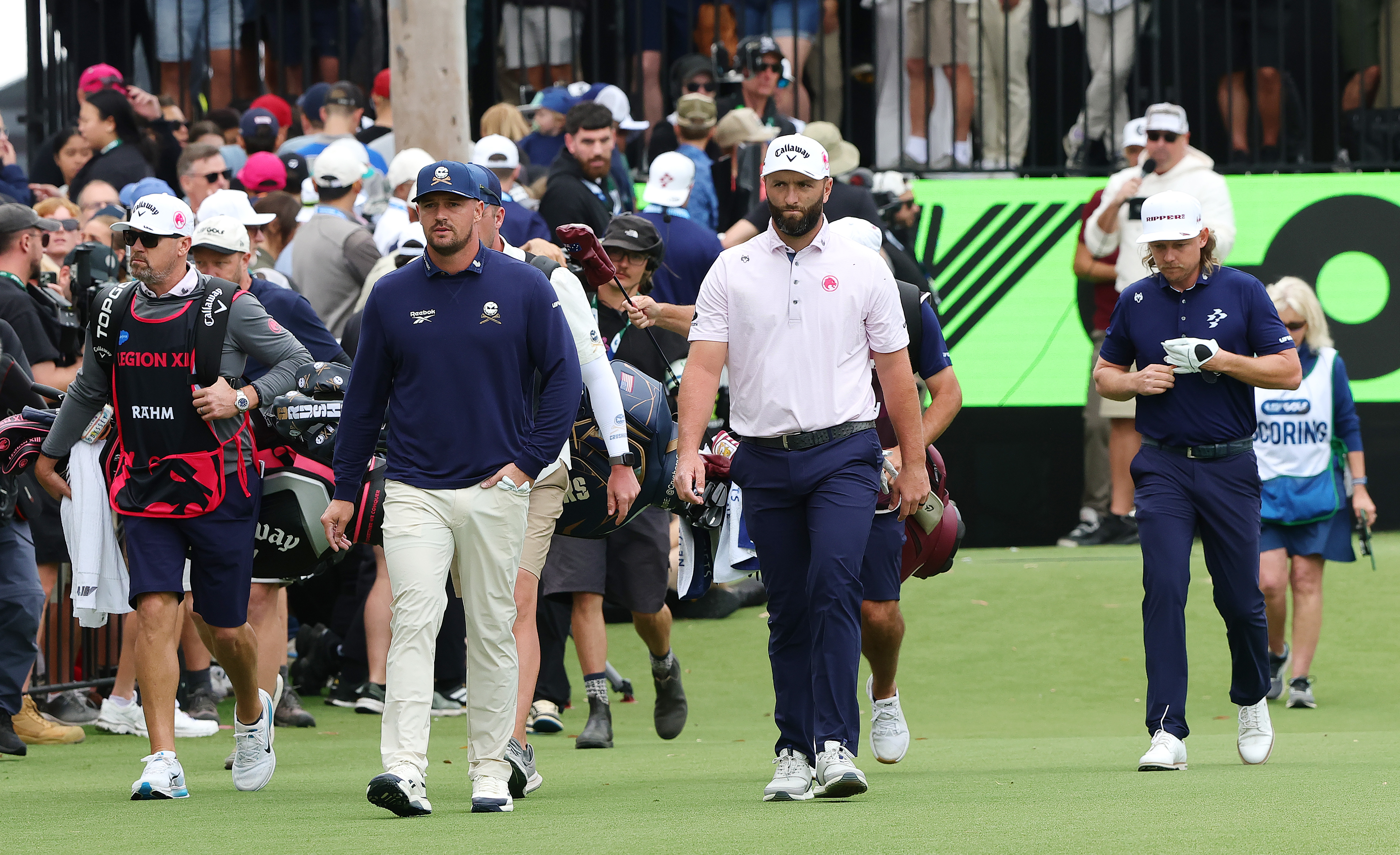
You mentioned stars, but there is obviously a possibility that one of the big names can leave at the end of the year. What is your plan going forward if, worst-case scenario, Bryson DeChambeau or Jon Rahm or both is not on the tour?
Jon’s under contract, which is a bit different, as you can imagine.
Just to be really clear, I think this is a misunderstanding. Our guys are contracted for 14 events. They can play anywhere they want at any time.
So if, for example, The Players wanted to elevate their field, they could invite our players, and they would be welcome to play, so long as we don’t have an event that weekend.
The European tour, even when they were fining us, we obviously had the right to stop (players) from going (to play on European events). We didn’t, though, because we believe in free agency for golf. We believe that players should have the opportunity to play when and where they want.
Their commitment with us is heavy in terms of travel. But their commitment is 14 events.
LIV has been trying to pull the center of gravity of golf away from the United States to some degree. Do you feel like that’s something that you’re leaning into now, going forward?
The U.S. is the biggest television market in the world. It’s the biggest sponsorship market in the world. The 340 million people that live in the U.S., by disposable income standards, are probably near the top of the world, I assume.
But there are 8 billion people out there, the rest of the world, and that’s a pretty interesting market. So when we think about growing for the long term, it’s the easiest answer of all time, right? If you’re going for the long term, you’d say, OK, I’m going to bet on the 8 billion.
I’m going to bet that markets like Japan and Korea and China, India, Australia, South Africa, UK, some of the European markets, Mexico … take that bet, you know? Predominantly outside the U.S. is a really attractive market. As we think about where the opportunity for real growth is, they’re in the markets where they would love to see a Bryson DeChambeau or Jon Rahm or Dustin Johnson.
What do you think made Adelaide and South Africa such successes? What did they have in common?
They have government support. They have a lot of golf courses, a lot of golfers. They’re interested in building. The federations are very strong. They’re interested in building strong youth golf. They have a good TV market, a good sponsor market, and the people like to have fun.
There are probably, I don’t know, 15 events on the planet that have 100,000 people. So that’s a high bar. I think we’ve got a product that people care about and want. It’s growing the game. It’s bringing new people into the game.
How would you characterize your professional relationship with (PGA Tour CEO) Brian (Rolapp) and the PGA Tour right now?
I’ve known Brian for a long time. I think he’s focused on his business. We’re focused on ours. We’re different products, different businesses, different markets.
This business is going into such transition. Over the next 18 months, maybe 24, you’re going to see the most dynamic change in golf, maybe in its history. For those of us who have a seat at the table, it’s a pretty incredible opportunity. How it shakes out, or who shakes out, or what the relationships will be, or how it manifests itself is to be determined.
But I think there’s some core principles that everybody understands. One is, the industry needs alignment. We need a world schedule. We need to come together to take on cricket, or football, or tennis, or something else other than ourselves. This notion of self-sabotage, it’s not good for business. It’s not good for golfers. It’s not good for television broadcasts. It’s not good for sponsors. That’s not as fun.
This is a sport that’s the most important sport in the world. World leaders play this sport. Ninety percent of the Fortune 500 CEOs play this sport. I couldn’t imagine any other sport assembling this kind of incredible power, talent, influence. I hope we all figure that out quickly.
How committed are you to having 13 teams? Maybe expanding, maybe contracting?
I’m nonplussed one way or the other about how many teams there are. What will determine the economic engine of this investment is the value of the team.
You look at any sports league around the world, look what’s happened to the asset value of teams. I’ll speak from the leagues I know. The NBA, when I came in in ‘92, I believe the Utah Jazz sold for ($22) million. And Ryan Smith bought them for $1.7 billion. … What’s a team with Bryson DeChambeau worth? I don’t know. You tell me. What’s a team with Jon Rahm worth?
With all the private equity money chasing sports, with all the family money not wanting to get left behind, and being able to be an owner of an F1 team, or a horse like we saw at the Kentucky Derby, or an NWSL team … that’s where the value will be. That’s where the growth will be. That’s where the equity opportunity will be.
How similar do you think the LIV of two years from now will look to the LIV of today?
It’s going to be very different in a lot of ways. But the core principles that will stay the same are, we’ll have players as partners, we’ll have team golf, and we’ll be globally focused. Those three things will be principles.
And what will be different?
You’ll soon find out.


